
Disclosure: WorkWise is reader-supported. When you buy through links on our site, we may earn an affiliate commission at no extra cost to you. Learn more.
If your eyes ache by 4pm, the problem usually isn't your monitor — it's the gap between your bright screen and your dim room. A good desk lamp closes that gap and the fatigue often disappears within a day. Here are the desk lamps that genuinely earn the "reduces eye strain" claim, organized by use case.
What actually causes screen-related eye strain
It's almost never the screen itself. It's the contrast between the bright screen and the dark room around it. Your pupils constantly adjust between the two brightness levels, and after eight hours your eye muscles are exhausted. A desk lamp raises the ambient light in your immediate field of view, closing that contrast gap.
What to look for in a desk lamp for screen work
- CRI 90+ — Color Rendering Index above 90 means the light is full-spectrum and easy on the eyes.
- No visible flicker — cheap LEDs strobe imperceptibly fast and cause headaches. Look for "flicker-free" in the specs.
- Adjustable color temperature (2700K–5000K range) — warm in evening, cool in morning.
- Stepless dimming — not just "low/medium/high"; you want fine control.
- Wide light spread — focused beams create glare; you want diffused, even light.
1. Best overall — BenQ ScreenBar Halo
BenQ ScreenBar Halo
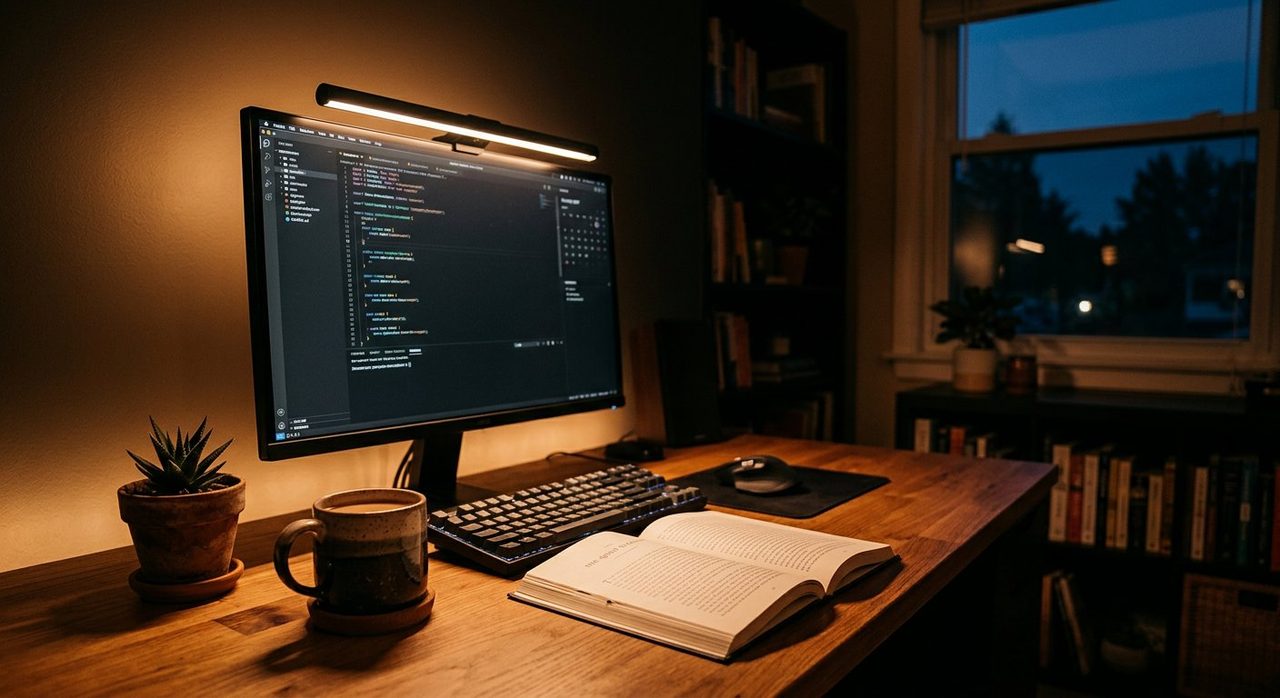
Clips onto the top of your monitor, lights your desk without reflecting on the screen. Auto-adjusts based on ambient light. Tunable color temperature with a wireless remote. The single best desk-lighting upgrade most home offices can make.
Check price on Amazon2. Best traditional swing-arm — BenQ e-Reading LED
BenQ e-Reading LED Desk Lamp
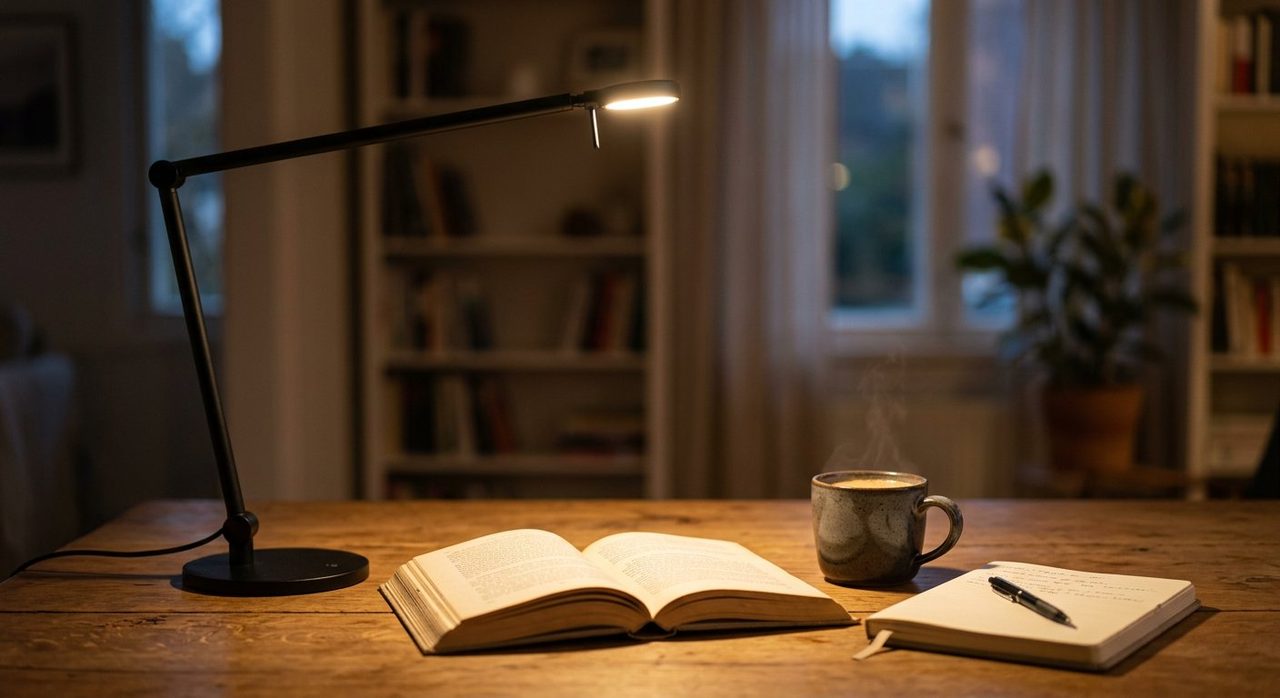
If a screen bar doesn't fit your monitor (curved or ultrawide), this is the backup. Wide head spreads light evenly across paper or desk, auto-dimming, color-tunable.
Check price on Amazon3. Best budget pick — TaoTronics LED Desk Lamp
TaoTronics 12W LED Desk Lamp
Under $40. Multiple brightness levels, color modes, USB charging port in the base. Not as refined as BenQ but solid for the price.
Check price on Amazon4. Best for designers/creatives — TaoTronics CRI 95
TaoTronics 7W Eye-Care LED with CRI 95
Color accuracy matters for design and photo work. CRI 95 gives near-natural color rendering, important when judging on-screen colors against printed proofs.
Check price on Amazon5. Best smart lamp — Govee Smart LED Desk Lamp
Govee Smart Desk Lamp Pro
Connects to Alexa/Google Home, schedules color temperature shifts through the day (cool in morning, warm in evening), tracks usage. Good for circadian rhythm.
Check price on AmazonThe cheapest lighting fix that costs nothing
Before buying any lamp, try this: turn on the overhead room light during your work day. Many home offices rely solely on a desk lamp with the room light off — which creates the exact contrast problem we're trying to solve. A bright overhead + medium desk lamp is often better than an expensive lamp in a dark room.
What we'd skip
- Ring lights as desk lamps. Designed for selfies; create distracting reflections in your glasses on video calls.
- Cheap "eye-care" LEDs under $20. Often flicker badly; the savings cost you headaches.
- Halogen or incandescent desk lamps. Hot, inefficient, color-shift over time. LEDs win every category in 2026.
Final word
For most readers, a BenQ ScreenBar Halo or original ScreenBar is the upgrade that genuinely changes how your eyes feel at 5pm. Pair it with our full home office lighting guide for the complete three-light setup.
Frequently asked questions
Do desk lamps really help with eye strain?
Yes, indirectly. A good desk lamp reduces the brightness gap between your monitor and your room — which is the actual cause of most digital eye strain. Lower contrast = less pupil work = less fatigue.
What's better: a screen bar light or a traditional desk lamp?
Screen bars (like the BenQ ScreenBar Halo) win for screen work because they light the desk without reflecting on the monitor. Traditional swing-arm lamps win for paper-based work where you need a focused beam.
How bright should a desk lamp be?
Around 500 lux at the work surface is the sweet spot — bright enough to reduce monitor-to-room contrast, dim enough not to compete with the screen. Most quality desk lamps let you dim to this range.
Are LED desk lamps safer than older bulbs?
LEDs that are CRI 90+ are excellent. Cheap LEDs (CRI under 80) can flicker and cause headaches over time. Always check the CRI rating — it's the most underrated spec.
Should I get a warm or cool white desk lamp?
Tunable is ideal. Cool white (4000-5000K) in the morning for alertness; warm white (2700-3000K) in the evening to help wind down. Most quality lamps in 2026 are tunable.
Spotted a mistake or want to suggest a product we should test? Get in touch — we read every message.